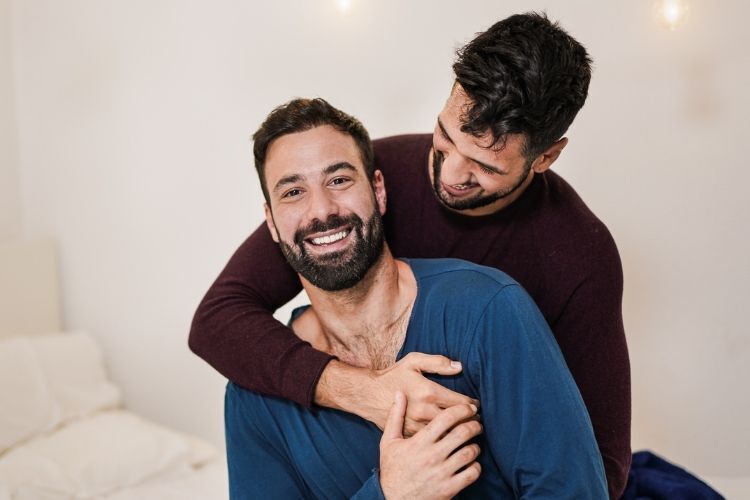
Most couples therapy assumes love looks one particular way. If you are a queer couple, a polyamorous triad, or a partnership that has written its own rules around commitment, you may know the feeling of sitting across from a therapist who needs everything explained first, or who treats your relationship structure as the problem to solve.
So can queer couples therapy help? For many partners, yes, as long as the therapist starts from understanding rather than explanation. Queer couples counselling doesn’t defend your relationship or question its shape. It looks at the pattern you keep landing in, the hurt that hasn’t been repaired, and the pressure of living in a world that wasn’t built with you in mind. At Centrepeace Counselling and Therapy Services in London, Ontario, relationship therapy is built on that foundation.
How Queer Couples Counselling Can Strengthen a Relationship
Queer couples counselling is relationship therapy that is affirming from the first minute. It supports partners of any gender or orientation, including trans and nonbinary partners, and relationships with two people or more. Nobody asks you to justify who you are before the real work begins. Many partners arrive after searching for couples therapy in London and finding few options that mention queer relationships at all.
No therapist can promise an outcome, but strength tends to show up in three practical ways. Partners learn to say what they need before a disagreement escalates. They get better at repairing after one. And they build agreements that match the relationship they actually have, rather than one borrowed from someone else’s template.
More Than Standard Couples Therapy With a Rainbow Sticker
Many LGBTQ couples therapy approaches borrow models designed around straight, monogamous marriage, and those models carry assumptions: gendered roles in conflict, one “right” timeline for commitment, a default picture of what a family looks like. Good queer couples therapy questions those assumptions. It works with the roles, rituals and agreements you actually have, and helps you strengthen them on your own terms.
Common Challenges Queer Couples Bring to Therapy
Couples of every kind argue about money, chores and intimacy. Queer partners often face those same stresses alongside a few extra ones, and queer couples counselling makes room for both.
Minority Stress Showing Up at Home
Prejudice, microaggressions and the daily decision about how visible to be do not stay outside the front door. That weight can come home as irritability, withdrawal, or a sense of being on guard even with each other. In queer couples counselling, naming it together often takes pressure off the relationship itself.
Different Places on the Coming-Out Journey
One partner may be out everywhere while the other is out to only a few people. That gap can create friction around holidays, workplaces and photos on social media. Counselling gives you space to talk about safety, pace and respect without either person feeling pushed or dismissed.
Family of Origin, Chosen Family and Boundaries
Some queer couples have supportive relatives nearby. Others rely on chosen family while navigating strained or absent ties with the people who raised them. Both situations shape how couples handle holidays, parenting decisions and conflict. A therapist who understands both can help you set boundaries that protect your relationship without forcing you to cut off anyone you want to keep. If relatives are part of the picture, family counselling is also available at Centrepeace.
Polyamory, Consensual Non-Monogamy and Couples Therapy in Ontario
Many people looking for polyamory couples therapy in Ontario ask whether a therapist is polyamory-affirming and get a polite but uncertain answer. Consensual non-monogamy (CNM) covers a wide range, including polyamory, open relationships, swinging, and structures that do not have a neat label. Queer couples counselling at Centrepeace welcomes all of them.
Therapy That Doesn’t Treat Openness as the Problem
An ethical non-monogamy affirming therapist starts from the assumption that your agreements are valid, then looks at how well they are working. The question is whether everyone involved understands and consents to the arrangement, and whether it feels sustainable. Whether you should be monogamous is not up for debate.
What the Work Often Involves
In queer couples counselling that includes more than two partners, sessions often focus on:
- Renegotiating agreements when needs, schedules or feelings change
- Working through jealousy, insecurity and the intensity of new relationship energy
- Sorting out time, energy and communication across several partners
- Supporting a transition, such as opening a relationship, closing it, or ending a connection with care
These are practical conversations, and they go more smoothly with someone who is not surprised by them.
How Pam Bailey Approaches Relationship Therapy in London
Pam Bailey, MSW, RSW, is a Registered Social Worker authorized to provide psychotherapy in Ontario, offering social work and psychotherapy services to clients across London and the province. She has more than 22 years of experience and a focus on 2SLGBTQIA+ mental health, and Centrepeace is a queer-owned practice. Her approach to queer couples counselling draws on training in Emotion-Focused Couples Therapy, Internal Family Systems and DBT-informed methods, alongside a social work lens that keeps your community, family and work in view.
In sessions, that means slowing down the cycle you get stuck in, finding the feelings underneath the argument, and building new ways of reaching each other. Pam offers this work in person at Centrepeace’s office in London’s Woodfield neighbourhood, close to Old East Village and Old North, or virtually for clients anywhere in Ontario. You can learn more about Pam’s approach to relationship therapy on the Centrepeace website.
Signs It May Be Time to Start Queer Couples Counselling
Many couples wait until a rough patch becomes a crisis. These earlier signals are worth listening to:
- The same argument keeps returning, whatever the topic
- One of you ends up educating or explaining more than feels fair
- A big change is underway, such as a transition, a move, a new baby, or a shift in your relationship agreements
- You feel more like roommates or logistics partners than a team
You do not need to be in crisis to book. Counselling also helps when things are going well and you want to strengthen what you have built.
What to Expect From Your First Step
The first step at Centrepeace is a free 15-minute online consultation. You can share what is going on, ask about Pam’s approach to queer couples counselling, and see whether it feels like the right fit before booking a full session. There is no pressure to decide anything that day.
Finding Queer Couples Counselling in London That Fits
The right therapist is one you do not have to educate. Whether you are a long-term pair, a newly formed triad, or partners working through a major change, support is available in London, Ontario and across the province online. If you are searching for queer couples counselling in London, a free consultation with Pam at Centrepeace is an easy place to begin.
